
PostgreSQL Course
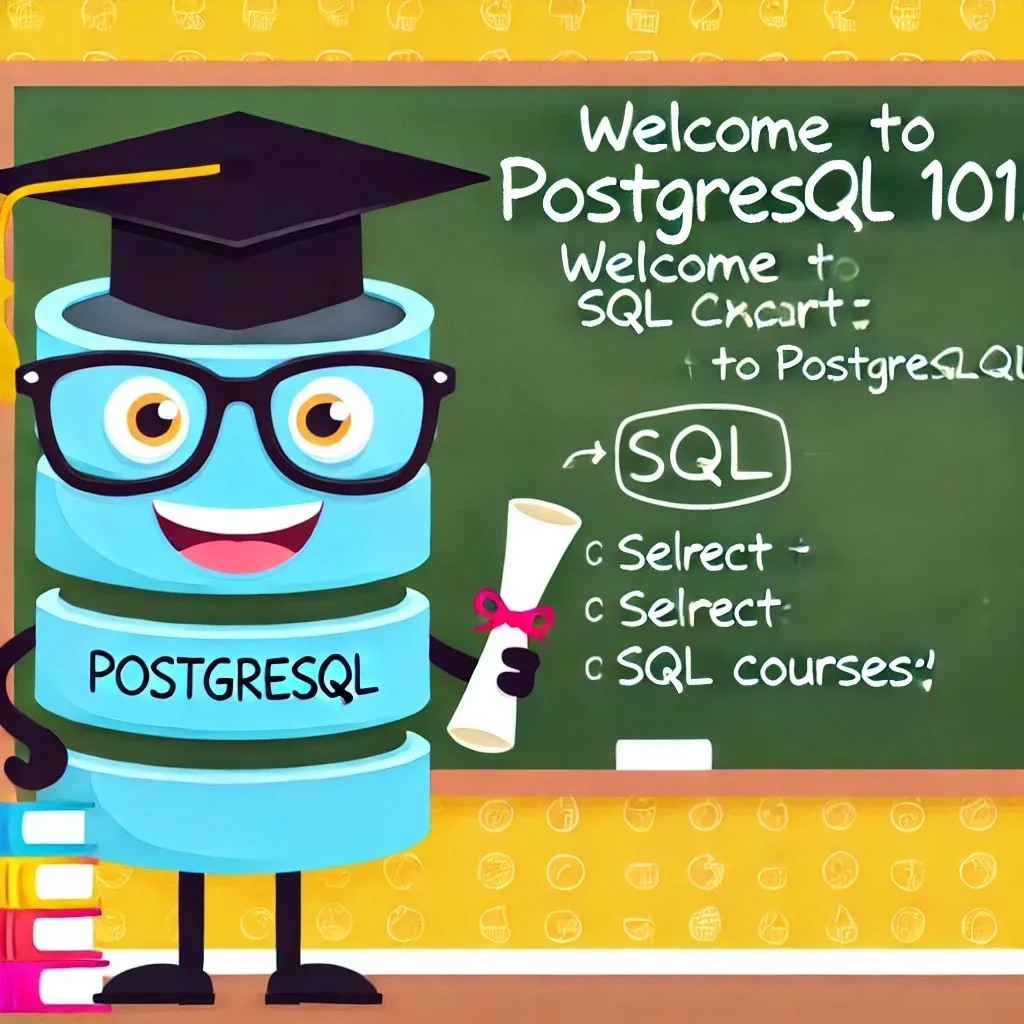
Welcome to the PostgreSQL course.
This is where your data stops floating around like a confused balloon and finally gets a proper home.
PostgreSQL is one of the most powerful and respected relational database systems in the world. It is used for web apps, APIs, dashboards, business tools, internal systems, SaaS platforms, and many other projects where data must be stored, organized, searched, updated, protected, and not lost because someone refreshed the page.
Very important detail.
Browsers forget.
Databases remember.
Sometimes too well.
Delete carefully.
What You Will Learn
In this course, you will learn how PostgreSQL works from the ground up.
You will start with the basics:
- what a database is;
- what tables are;
- how rows and columns work;
- how SQL lets you talk to the database;
- how to create databases and tables;
- how to insert, read, update, and delete data.
Then you will move into more serious database skills:
- data types;
- constraints;
- filtering and sorting;
- primary keys;
- foreign keys;
- relationships between tables;
- JOINs;
- aggregation;
- indexes;
- basic performance ideas;
- using PostgreSQL with applications.
By the end of the course, you will not just know SQL commands.
You will understand how data is structured.
And that is a big step.
Because bad data structure is like a messy garage.
At first it looks fine.
Then one day you need one cable.
And everything collapses.
Who This Course Is For
This course is for beginners who want to understand databases without drowning in scary theory.
You do not need to be a database expert.
You do not need to know advanced backend development.
You just need curiosity, a terminal, PostgreSQL installed, and the courage to type semicolons.
Very important.
SQL loves semicolons.
The course is useful if you are learning:
- backend development;
- Django;
- Java Spring Boot;
- Node.js;
- full-stack development;
- DevOps basics;
- data management;
- web application development.
If you are building real websites or applications, PostgreSQL is one of those skills that quietly becomes very useful.
Like a good screwdriver.
Not glamorous.
But when you need it, you really need it.
How We Will Learn
We will learn by doing.
Each lesson will explain one important idea, then show practical SQL examples.
You will create databases.
You will create tables.
You will insert data.
You will run queries.
You will break things.
Then you will fix them.
This is normal.
PostgreSQL is powerful, but it is also strict.
It does not guess what you meant emotionally.
If the query is wrong, it tells you.
Sometimes politely.
Sometimes like a tired accountant.
Course Structure
This course has 12 lessons.
We will go step by step from basic PostgreSQL usage to a small final database project.
You will begin with installation and simple tables.
Then you will learn how to work with real data, connect tables, query relationships, improve structure, and understand the ideas that make relational databases powerful.
No rush.
No panic.
No database dragon.
Mostly.
Start the Course
Start with the first lesson:
Lesson 1: Getting Started with PostgreSQL
In the first lesson, you will install PostgreSQL, open psql, create your first database, create your first table, insert data, and run your first SELECT query.
Small beginning.
Big future.
Very PostgreSQL.